
Step 1
When does a hearing test make sense?
- if you feel you hear less well, or others notice it
- with a noise in the ear (tinnitus) or a feeling of pressure in the ear
- in children: often asking you to repeat things, a loud TV, delayed speech development, after repeated middle ear infections or with fluid in the ear
- as a check after treatment, for example after grommets (ear tubes)
Step 2
Which hearing tests are there?
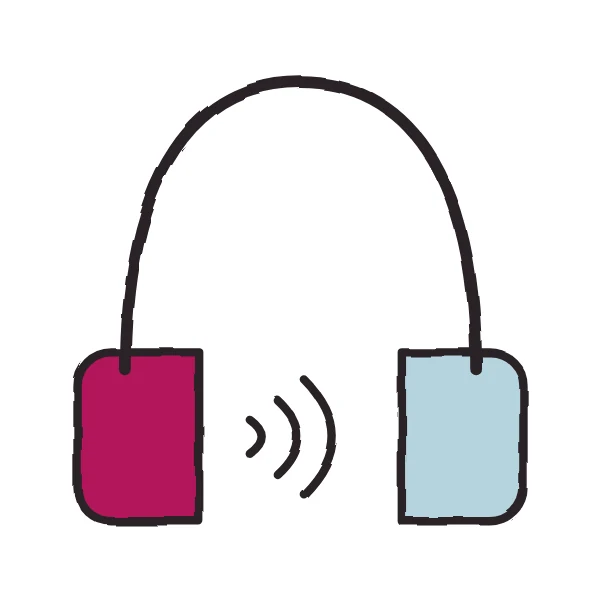
Pure-tone audiometry: tones of different pitch and volume are played through headphones; you signal when you hear a tone. This gives a picture of your hearing in both ears. It needs your cooperation, in children usually from kindergarten age.
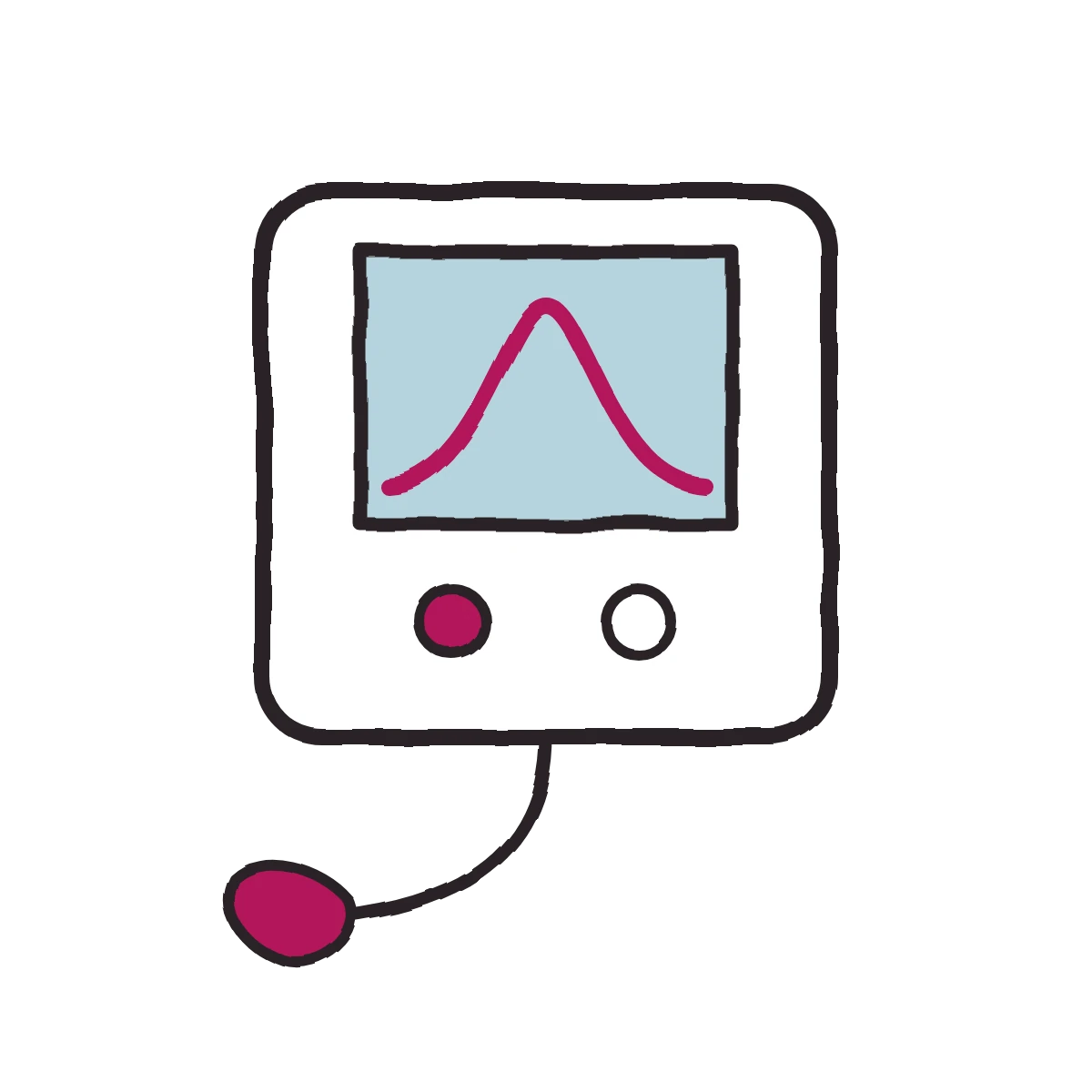
Tympanometry: a small probe in the ear canal measures how mobile the eardrum is. This shows whether there is fluid behind the eardrum, for example with glue ear. The measurement takes only a few seconds.
OAE (otoacoustic emissions): a small probe in the ear checks how the inner ear responds to quiet tones. The child does not need to cooperate; ideally it is calm or asleep. This is why OAE is suitable for babies and toddlers.
Step 3
Hearing tests for babies and children
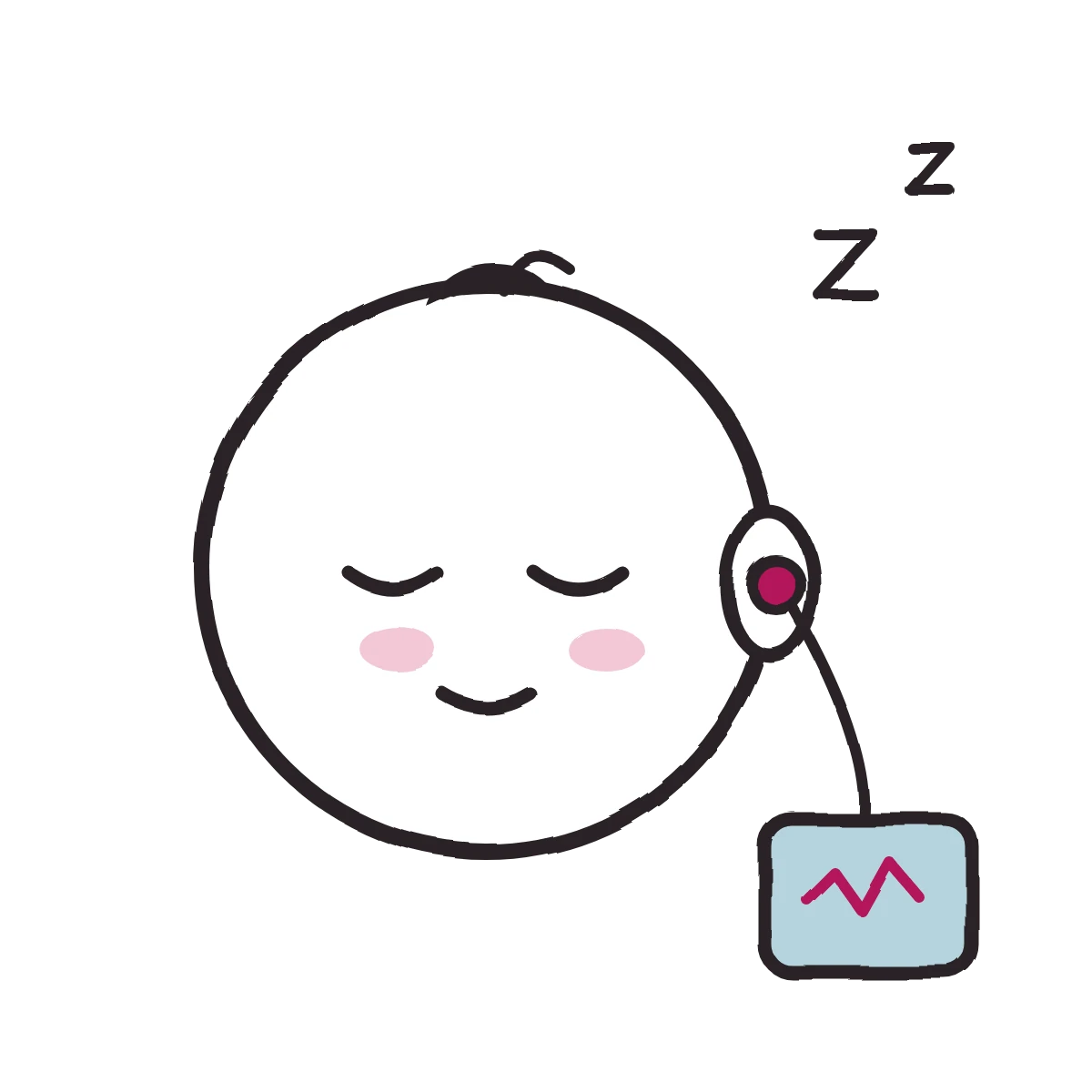
In the Eltern-Kind-Pass, newborn hearing screening is scheduled for the first to, at the latest, fourth week of life and is carried out in hospital, usually before discharge from the maternity hospital. If the screening was abnormal or is missing, it should be repeated promptly, if possible in the first month of life, through the maternity hospital or a centre for hearing disorders in children. In the practice the ear can also be examined and an OAE measurement taken; for further measurements such as brainstem audiometry you will be referred.
The ENT examination in the Eltern-Kind-Pass is scheduled for the 7th to 9th month of life and can also be carried out by an ENT specialist.
With doctors contracted to the health insurer (Vertragsärztinnen and Vertragsärzte), the Eltern-Kind-Pass examination is free of charge. In a private practice (Wahlarztordination) you first pay for the examination yourself; with the invoice (Honorarnote) you can apply to your health insurer for a partial refund based on the insurer's tariff (Kassentarif). The examination is confirmed with a stamp and signature in the Eltern-Kind-Pass. If in doubt, please check with your health insurer whether all the records needed for childcare benefit (Kinderbetreuungsgeld) are complete.
If a child hears less well, fluid in the middle ear is often the cause.
Step 4
How does the hearing test work?
First I look at the ear canal and eardrum with the ear microscope; ear wax can distort a result and is removed first if necessary. Then, depending on age and the question, tympanometry, OAE or pure-tone audiometry follows. I discuss the result with you directly afterwards.
Step 5
When should I come straight away?
Don't wait if …
- suddenly much poorer hearing, especially in one ear: if possible within the next one to two days
- hearing loss with dizziness, paralysis, speech disturbance or severe headache: call 144 immediately
Did you know …?
Ear wax can distort the result of a hearing test; that is why the ear is looked at first.
Appointments and fees
This is a private practice (Wahlarzt) without insurer contracts. You receive an invoice (Honorarnote) that you can submit to your health insurer to claim a partial refund.
Frequently asked questions
From what age can hearing be tested?
With OAE already in newborns and babies; pure-tone audiometry usually from kindergarten age, when the child joins in.
Does a hearing test hurt?
No. The probe in the ear can feel unusual, but it is not painful.
Do I need to prepare?
No. Bring earlier hearing test results if you have them.
- #hearingtest
- #hearingscreening
- #paediatricENT
- #ear
Sharing helps.
Do you know someone with similar symptoms? This page may help them.